
Launched during Summit on Clean Cooking in Africa, a new report underscores the potential for electric cooking, including for marginalized and displaced off-grid communities
Today, nearly four in five people in Africa cook their meals over open fires and traditional stoves, using wood, charcoal, animal dung, and other polluting fuels.
This has dire impacts on health, gender equality and the environment, with women and children bearing the worst consequences.
At the same time, cooking with biomass such as wood and charcoal amounts for as much as 2% of all CO2 emissions, while the extensive reliance on wood for cooking is contributing to deforestation, worsening the climate impacts.
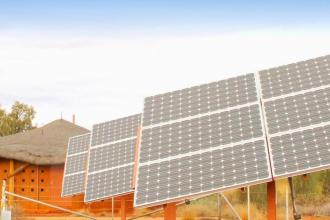
A new report points to opportunities for solar electric cooking (e-cooking) to scale these solutions to help close the emissions gap and deliver a range of co-benefits in support of numerous Sustainable Development Goals.
The report was lunched today during the Summit on Clean Cooking in Africa convened by the International Energy Agency to make 2024 a turning point for progress on ensuring clean cooking access for all.
Along with the UNEP hosted Climate and Clean Air Coalition the report advocates for the importance of including marginalized and displaced off-grid populations into e-cooking policy and investment planning.
A dual solution to mitigation and adaptation
In the pursuit of sustainable development and climate resilience, off-grid e-cooking offers a dual solution encompassing both climate change mitigation and adaptation strategies. Clean cooking targets feature prominently in NDCs across Africa, including some explicit targets for e-cooking.
However, barriers to uptake remain and so a range of supply and demand-side interventions are needed to overcome these, to enable the provision of affordable financing for households to purchase solar e-cooking systems.
In the report, published by UNEP Copenhagen Climate Centre and the World Food Programme, specific needs and opportunities for both demand and supply-side market activation for solar e-cooking technologies are identified, as a linchpin of climate resilience and sustainable development at the last mile, in the global south.
UNEP Copenhagen Climate Centre is a steering group member of the UN’s Global Platform for Action on SDG7 in situations of displacement, working to emphasize the significance of energy for cooking as a pivotal climate issue, in addition to being a critical concern for economic development, health, gender equality, and the local environment in low-income countries.