An innovative picture-based insurance scheme provides Ugandan banana farmers with a safety net against drought, storms, and extreme weather events, enhancing climate resilience.
It was supposed to rain.
James had bought the coffee husks and spread them under his new banana plants for fertilizer, expecting the rain to come in mid-August as it usually does.
But it didn’t rain.
[caption id="attachment_44260" align="alignright" width="234"]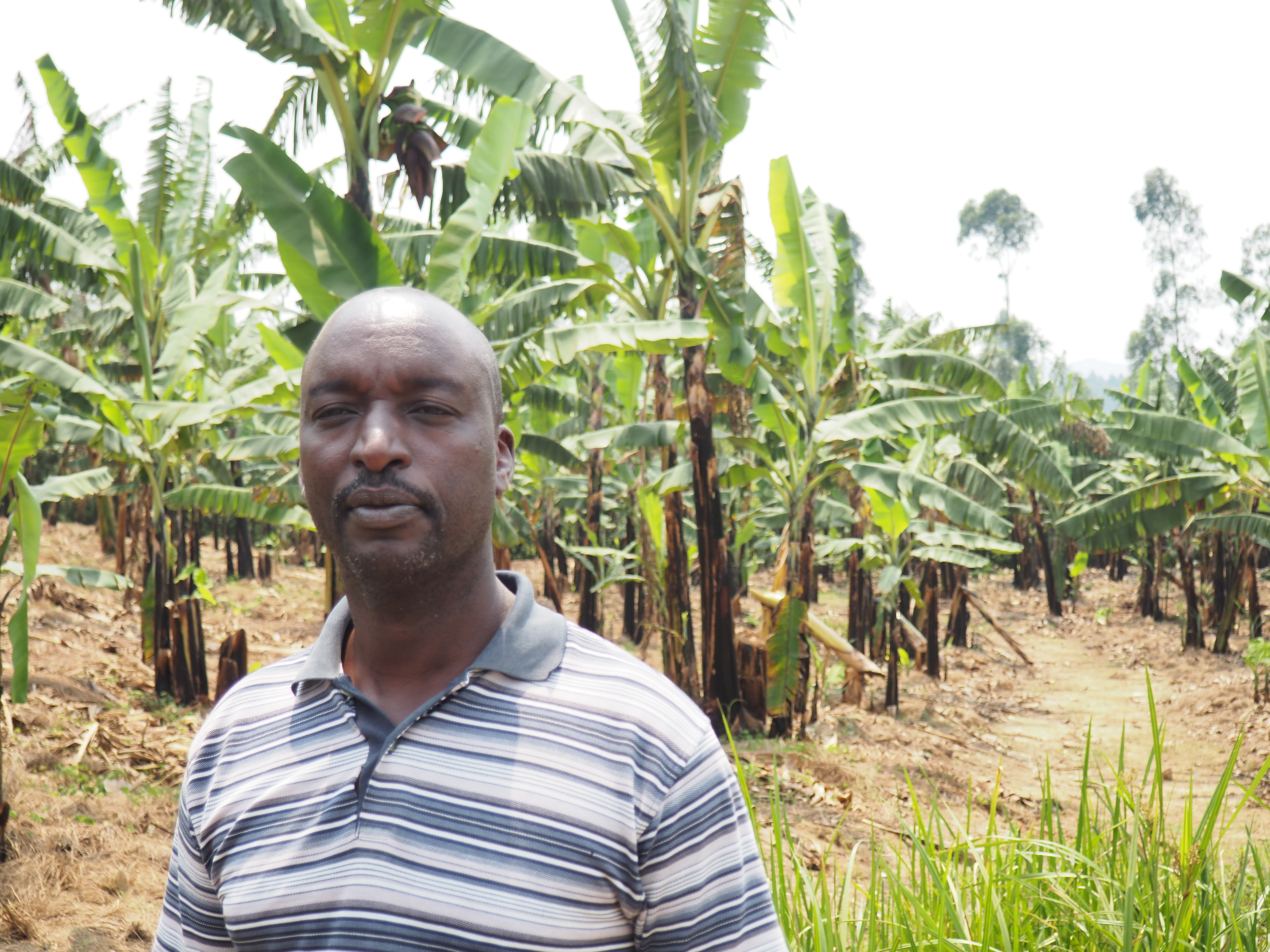 James Mugume in front of his banana plantation[/caption]
James Mugume and his family are banana farmers with a plantation located about an hour from Bushyeni in Southwest
Uganda, a country known as Africa’s breadbasket because of its fertile soil. In his 48 years, he has never experienced a dry period like this.
The rain that was supposed to start in February didn’t come until March, and instead of continuing until May or sometime even June, it stopped raining in April.
More than 4 months without rain.
The banana bunches hanging from the older and bigger plants in his plantation are now in jeopardy of getting discarded by the plant, if they don’t get water soon. And his new banana plants, getting baked under a relentless sun, might not make it at all. In a country known for its lush vegetation and green hills and valleys, James has never needed irrigation to grow his plants. Until now.
[caption id="attachment_44259" align="alignleft" width="263"]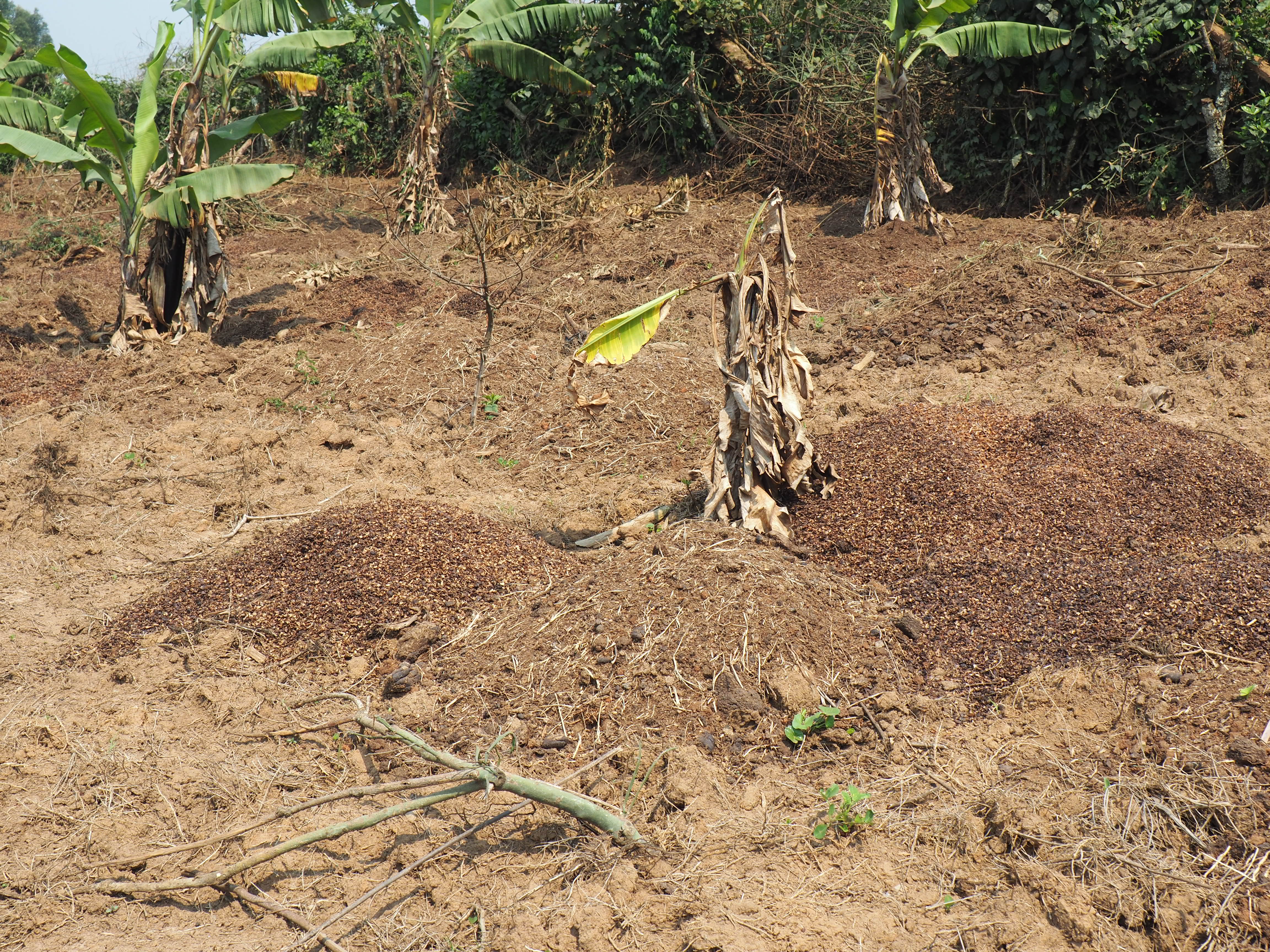 Struggling new banana plants on James Mugume's plantation[/caption]
UNEP and the UNEP Copenhagen Climate Centre is now introducing a picture-based insurance directly aimed at smallholder banana farmers. The insurance is the first ever insurance available to banana farmers in Uganda and will ensure that the farmers can quickly and fully recover after extreme climate related events, avoiding catastrophic financial losses and threats to food security.
The picture-based insurance has been developed and is introduced in a collaboration with ACRE Africa - a company specialized in agro-insurance products, AIC – a public private partnership for the Uganda Agricultural Insurance Scheme, and the Banana Industrial Research and Development Centre (BIRDC) – organizing more than 5000 banana farmers in cooperatives in Southwestern Uganda,
Worried about the storms to come
Tusingwire Allen has also noticed the changes in the climate.
During the rainy season, her plantation is now getting hit with severe storms sometimes with hail and heavy rainfall, and in the dry season, there is always a drought.
With the roots of the banana plant only stretching through the surface of the soil, lack of rain hits hard.
[caption id="attachment_44263" align="alignright" width="316"]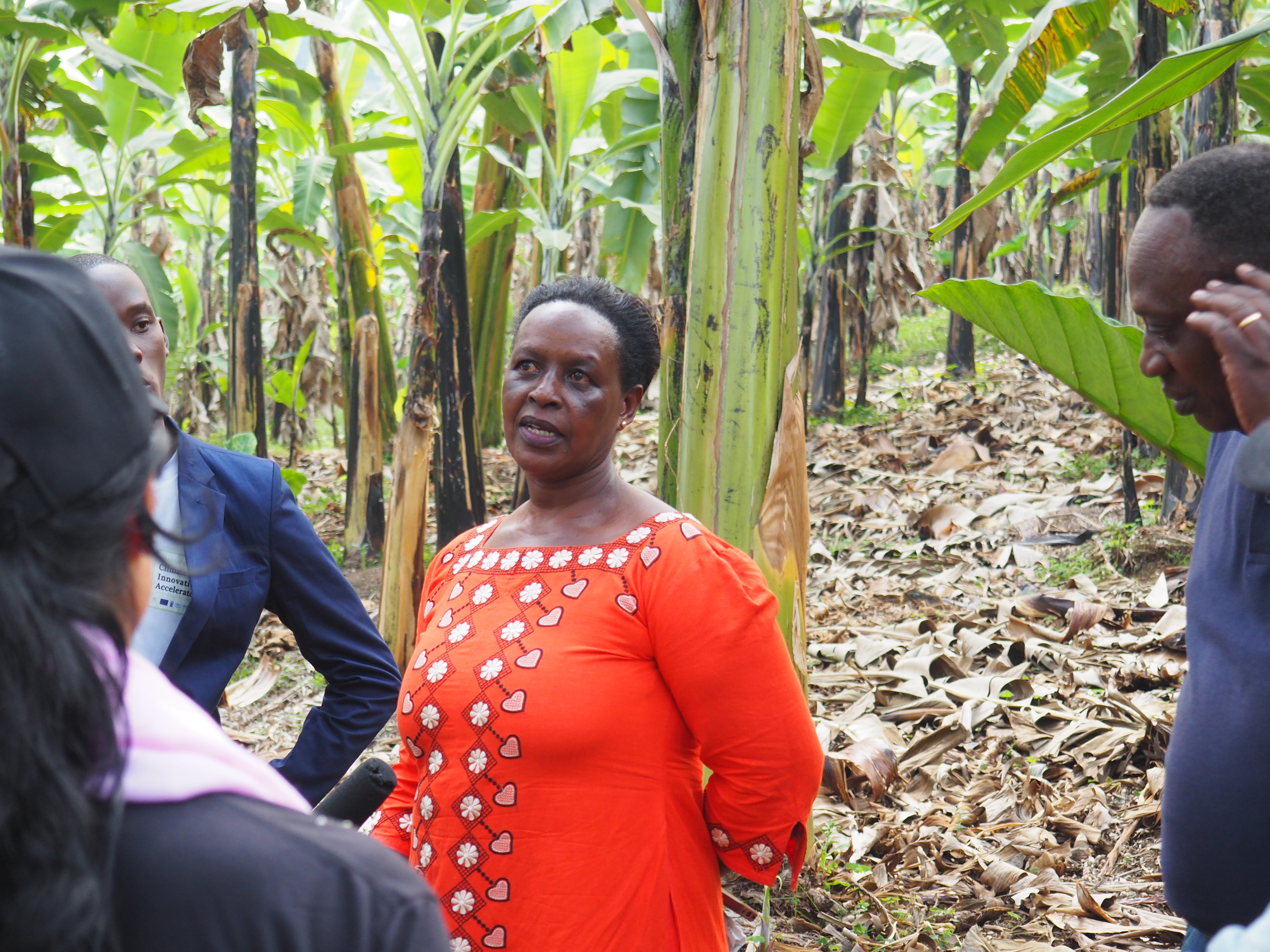 Tusingwire Allen talking about the impact of insurance[/caption]
The drought caused by the extended dry season not only effects the bananas through the lack of water. Banana weevils, the most destructive banana pest in Uganda, multiply in the dry weather, and attack the bananas to suck out moisture. When it gets extra dry, there are sometimes so many weevils, that she could she them crawling around without having to look for them.
From her house on a small ridge in the hilly landscape near Bushyeni, her two acres of banana plants stretch down towards the valley. Her plants are well taken care of, and have grown taller than many in the area, but even so she is worried about the future weather. Under the bananas dried palm leaves crunch under her feet. Covering the ground under the plants is a practice advocated by BIRDC to prevent the soil from drying too much under the harsh sun.
In her experience, when the rain takes a long time to come, when it finally does come, it comes that much harder. Both Tusingwire and James are worried about the upcoming wet season, and the storms that usually show up in September. If it is a bad season, they will get hit by wind, heavy rain and hailstorms resulting in low or no productivity until the plantations are fully restored after up to four seasons.
Tusingwire and James are two of 300 farmers in the new picture-based insurance scheme, and they are far from alone in their worries about climate change impacts.
In 2019, more than half of Uganda’s agricultural households reported experiencing drought, while about 29 percent suffered from erratic or heavy rains.
Insurance and guidance through the phone
The green cooking bananas, or matooke as they are called in Uganda, on James’ and Tusingwire’s farms are cultivated by almost half of all agricultural households in Uganda. It is a food security crop, income source, main dish, serves a plethora of other daily purposes and is an important part of Ugandan Culture.
But even as James and Tusingwire, and the rest of the millions of people in Uganda that rely on growing bananas, face the effects of climate change on their crops and lives, there has been no way for them to get the insurance to help them adapts and recover after droughts, storms and floods.
The Picture-based insurance scheme has been successfully implemented by ACRE Africa in Kenya. It uses pictures taken by the farmers on their smartphones to both assess values to be insured and damage to the crops.
The insurance also comes with access to immediate support though WhatsApp and continuous trainings and follow-up visits.
https://unepccc.org/innovative-picture-based-insurance-solution-boosts-climate-resilience-for-ugandas-smallholder-banana-farmers/
Insurance compensation enables rebuilding
James risks losing his new banana plants and like on Tusingwire’s plantation the bunches growing on his older plants are smaller than normal, meaning they will sell for less.
Because of the drought, all of their banana plants are more vulnerable to wind and damage from the heavy rain and hailstorms they fear is going to hit them in a month, when the wet season usually starts.
When introduced to the new picture-based insurance, many of the farmers were surprised that insurance could be an option in their efforts to build climate resilience. They had heard of car insurances and knew that buildings could be insured, but not bananas.
With the introduction of insurance for smallholder banana farmers in Uganda, Tusingwire Allen is now much calmer, when she now looks towards the coming storms.
Instead of losing everything if something were to happen to her plantation, she will be able to use the compensation from the insurance to rebuild and meet the needs of her family.
Translating NDCs into action
So far almost 300 farmers have registered for the picture-based insurance, and more than 400 have received training in how to use the insurance app on their smartphones.
BIRDC is continuing helping farmers register, and the consortium behind the new scheme is targeting a total of 50.000 Ugandan smallholder banana farmers in the current project. With additional funding, more than 300.000 farmers could be insured against the extreme weather events plaguing Ugandan farms.
The picture-based insurance scheme being rolled out in the cooperatives around Bushyeni is an outcome of the NDC Action project, leveraging funding from the UNDP-AFCIA programme to further develop the concept of picture-based insurances for smallholder banana farmers in Uganda.