Measuring Sustainable Development in NAMAs

The Measuring Sustainable Development in NAMAs project contributed to improve quantitative and qualitative measurement of the sustainable development outcomes of Nationally Appropriate Mitigation Actions (NAMAs). It enhanced understanding of how NAMAs can contribute to meeting national development goals and provided improved knowledge of early action and lessons learned on measurement of sustainable development considerations in NAMAs. This was done through:
  • A review on tools and approaches used to assess and measure the sustainable development contributions of projects and initiat


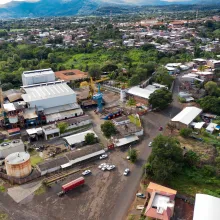
NAMA for sugar mills in Mexico

Sugar mills in Mexico produce more than 15 million tons of bagasse every year. While this by-product of sugar production is used as fuel in sugar mills, half of it is usually wasted through inefficient incineration. This means that its power production potential of up to 3000 GWh/year is lost. UNEP DTU Partnership  has developed a financial structure with a central SPV (special Purpose Vehicle)  to finance, construct and operate the connection of Mexican sugar mills to the national grid.
Tags

MAAP tool assessment

The Mitigation Action Assessment Protocol (MAAP) tool was developed by the World Bank to promote transparency in how mitigation actions are designed and how they compare in terms of quality of design. The MAAP tool is an assessment tool for identifying strengths and weaknesses in mitigation action design. It allows practitioners to improve the completeness of their Nationally Appropriate Mitigation Actions (NAMAs), enhance transparency of the mitigation action, communicate benefits and strengths stakeholders, and provide an objective assessment, enhancing trust. UNEP DTU Partnership assisted
Tags

Roadmap to Nationally Appropriate Mitigation Actions in the Livestock Sector of Honduras and Nicaragua

Livestock farming in Latin America generates high greenhouse gas emissions but is also the main source of income for vulnerable populations that could be most affected by climate change. In Honduras and Nicaragua, the livestock sector is of great economic importance, occupying more than 30% of the territory. It contributes between 10‐18% of GDP, and is the main livelihood for more than 700,000 people.

Facilitating Implementation and Readiness for Mitigation (FIRM)

The Facilitating Implementation and Readiness for Mitigation (FIRM) project worked to strengthen national capacities to formulate low carbon development strategies and identify mitigation opportunities. FIRM worked within the context of national sustainable development priorities and the evolving concept of Nationally Appropriate Mitigation Actions (NAMAs).

Adaptation Mitigation Readiness (ADMIRE)

  ADMIRE supports a total of 6 projects focused on adaptation or joint adaptation/mitigation: In Cambodia, this joint mitigation-adaptation project aims to develop a NAMA for sustainable charcoal. Adaptation benefits are also achieved through direct economic contributions to community forest groups, and indirect benefits of restored ecosystems. Through this project, in Ghana, farmers are able to subscribe to text and voice messages alerting them to weather variability and good practice agricultural techniques.