Increased transparency and documentation of private sector contributions to NDCs
In order to achieve the Paris Agreement goal of holding the increase in global mean temperature at well below 2 °C, relative to pre-industrial levels, and pursue efforts to limit warming to 1.5 °C, every single effort resulting in GHG emission reduction or contribution to SDGs should be measured/monitored and reported. While a number of efforts will take place at national level, led mainly by the government, a number of emission reduction activities take place currently at micro or small scale by private or non-state initiatives.
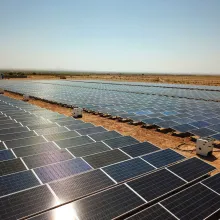
Private Sector Engagement in Climate Change Adaptation
By drawing on evidence-based learning, new empirical cases, as well as existing scholarly work, the project contributes with diverse and original perspectives, insights and reflections on the role and prospects for the private sector to build climate change resilience.
The project contributes with:
- A global stocktake and assessment of work within the field of adaptation and private sector.

NAMAcademy
The overall objective of the NAMAcademy is to provide focused training on practical issues when designing climate change mitigation policies and actions, as well as assisting in bringing the initial idea to a well-structured concept designed to approach potential financiers.
Adaptation Mitigation Readiness (ADMIRE)
ADMIRE supports a total of 6 projects focused on adaptation or joint adaptation/mitigation:
In Cambodia, this joint mitigation-adaptation project aims to develop a NAMA for sustainable charcoal. Adaptation benefits are also achieved through direct economic contributions to community forest groups, and indirect benefits of restored ecosystems.
Through this project, in Ghana, farmers are able to subscribe to text and voice messages alerting them to weather variability and good practice agricultural techniques.