Botswana has imported Texan cattle to improve climate resilience, in parallel with recommendations in the Technology Needs Assessment
162 cattle imported from Texas landed in Gaborone last month to help improve climate resilience and productivity of local breeds.
The Texan herd consisted of several breeds of cattle such as the American Brahman, that are more drought and disease resistant, better suited for the impacts of climate change in Botswana.
By breeding the imported cattle and mixing with local breeds, it is expected that Batswana farmers will be able to increase production and income, in the end leading to greater food security, by improving their climate resilience.
Drought resistant cattle: A climate technology priority
Breeding and promotion of drought-tolerant livestock was one of the prioritized technologies in Botswana’s Technology Needs Assessment (TNA), carried out by UNEP Copenhagen Climate Centre, supported by funding from the Green Climate Fund through CTCN.
In a parallel process to the import of Texan cattle, the TNA team in Botswana finalized the prioritization of climate technologies to meet the need for adaptation and mitigation actions.
The selected technologies were presented in the TNA Validation Workshop in October 2022, and concrete supportive actions were proposed at the recent Technology Action Plan Workshop in May 2023. Here selective breeding and diversification of livestock was highlighted as a means for Botswana to reach its climate goals and adapt to the impact of climate change.
As the TNA consultant on adaptation technology Prof. Elenimo Khonga expressed it during the workshop:
“The idea of having diverse livestock genetic resources for drought tolerance is worth every Pula spent now because the future of the livestock industry in Botswana under the impacts of climate depends on it”.
TNA recommendations for increased cattle impact
Botswana’s climate is semiarid with frequent droughts, high summer temperatures and erratic and poorly distributed rainfall. Climate change is making the situation worse by increasing temperatures, reducing annual rainfall, and delaying the onset of the rainy season.
The TNA identified breeding for drought-tolerant livestock as a way to ensure resilience of traditional farmers and of the Botswana economy to the impacts of climate change, as beef export is a major contributor to the national economy. Going further, the TNA analyzed the barriers that hinder more use of the technologies, and proposed enabling measures to accelerate their diffusion.
As well as importing breeding cattle that are able to better withstand the impacts that climate change is having on Botswana’s environment, the Technology Action Plan includes a range of suggested measures to increase the stock of such cattle in Botswana through artificial insemination:
- Evidence-based information and awareness campaigns on the use of artificial insemination
- Training of climate change champion extension staff
- Access to low-interest loans or grants for 1000 most vulnerable holders with special consideration of women and youth over next five years to transport cows to insemination centres
- Access to low-interest loans and or grants for 100 youth entrepreneurs to have on-farm artificial insemination for vulnerable farmers.
These are recommendations that could contribute significantly to enhanced drought resistance in the stock of cattle in Botswana, making sure initiatives, such as the import of Texan cattle, benefit the people most vulnerable to the effects of climate change.
Climate Technology for adaptation action
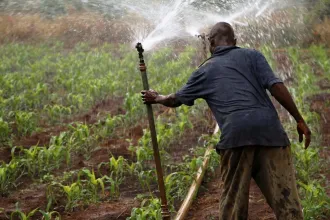
The Technology Needs Assessment in Botswana prioritized three relevant climate technologies for adaptation action in the agriculture sector. Besides livestock diversification through breeding, soil fertility testing for sustainable nutrient management and crop yields, and crop diversification, introducing more drought resistant crops, were the top technologies.
The action plan includes a proposal to acquire five mobile soil-testing laboratories and to expand the cultivation of sorghum, which is more drought resistant than the traditionally grown maize, the normal staple food in Southern and Eastern Africa.
Climate change adaptation through artificial insemination
The Texan cattle, 141 bulls and 21 heifers, will be used for semen and embryo production for the domestic market as well as for export, at the National Artificial Insemination Laboratory in Ramatlabama.
The average cattle herd per farmer in Botswana’s traditional sector consists of 32 cows. By using artificial insemination, it is expected that the cost of breeding with the new Texan cattle will be reduced for farmers who do not otherwise have the resources to invest in upgrading their herd the natural way.