
UNEP Copenhagen Climate Centre supports countries in designing and implementing market-based approaches to mobilize climate finance and accelerate mitigation action. This includes technical assistance on business models and financing strategies, carbon market readiness, policy and regulatory frameworks, and institutional capacity development.

Country Support
UNEP Copenhagen Climate Centre works with national governments to identify and develop mitigation and adaptation opportunities that can be translated into investment-ready activities. Support also covers the development of NDC investment plans, ensuring alignment with national development priorities and international frameworks.
Through analytical tools, capacity building, and in-country engagement, UNEP Copenhagen Climate Centre helps countries access and deploy climate finance effectively, strengthening the link between climate targets and implementation while supporting sustainable development outcomes.
Where we work

Carbon Markets
Carbon Markets aligned with the Paris Agreement Article 6 can be powerful tools for mobilizing finance and enabling cost-effective greenhouse gas mitigation. They can support countries and non-state actors in achieving and enhancing the ambition of their NDCs and climate targets, ensuring environmental integrity and promoting sustainable development.
UNEP Copenhagen Climate Centre provides science-based, technical analysis and capacity building support to developing countries enabling their use of international, national and voluntary carbon markets as carbon pricing tools. This includes support for development and implementation of national carbon market policy, legal and regulatory frameworks, registry infrastructure and monitoring, reporting, and verification (MRV) systems to ensure that emission reductions are credible and transparent.
The Centre also provides guidance on design and financing of mitigation activities, accounting rules, and integration into climate strategies. Through capacity building and practical support, UNEP Copenhagen Climate Centre helps countries translate carbon market opportunities into effective implementation aligned with national and global climate and development goals.

Article 6 Pipeline
The UNEP Copenhagen Climate Centre Article 6 Pipeline is a web-based platform designed to support effective implementation of Article 6 of the Paris Agreement.
Interactive maps, dashboards, and country data allow users to explore activities by region, sector, types and sub-types of mitigation technologies and methodologies.
The platform provides open-data and analysis on bilateral agreements, CDM transition and sustainable development to promote integrity and credibility in global carbon markets while advancing climate ambition and sustainable development.

Business Models
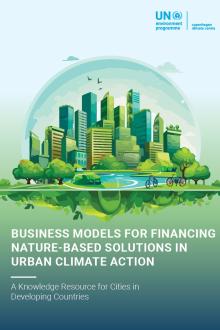
UNEP Copenhagen Climate Centre supports the design and implementation of innovative business models that enable climate action at scale. The Centre’s work focuses on translating climate policies and technology needs into investable and scalable solutions across energy systems, buildings, transport, industry, nature-based solutions and cities.
A key focus is to strengthen regulatory frameworks and the design of financing strategies that allow climate investments to be implemented effectively. This includes supporting governments and private sector actors in developing investable projects that improve mitigation and adaptation to climate change.
The Centre works across the full implementation chain—from early-stage project identification and feasibility analysis to market development, financing design, and deployment support. It also promotes standardized approaches, performance-based models, and public-private collaboration mechanisms that help scale climate solutions across sectors and countries.
Through analytical tools, guides, training programmes, and targeted technical assistance, UNEP Copenhagen Climate Centre helps align climate ambition with practical implementation pathways and financial viability.

Global ESCO Network
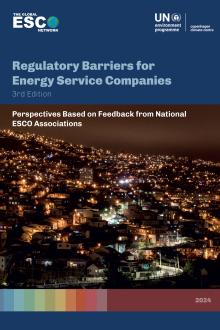
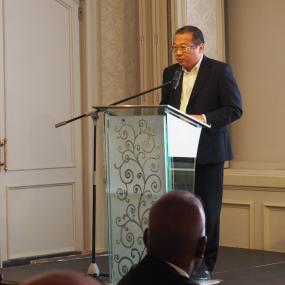
The Global ESCO Network was established to help Energy Service Companies (ESCOs) reach their full potential.
ESCOs are a central example of how innovative business models can accelerate energy efficiency and climate mitigation.
ESCOs can deliver energy savings with investments that are repaid from verified efficiency gains. This shifts upfront investment barriers and enables public and private actors to implement energy efficiency measures at scale.
About the Global ESCO Network
Energy Service Companies – ESCOs – deploy a business model directly responding to the global climate change challenge. By directly using energy savings to pay for the cost of equipment and infrastructure that creates those savings, ESCOs challenge the mantra that emissions reduction activity comes at a cost that many, particularly in developing countries, are unable to carry. In the business of climate change, ESCOs deliver some of the best returns on investment, reducing energy consumption while combating excess GHG emissions as a significant co-benefit.
Rationale for the establishment of a Global ESCO Network
In many countries, ESCO Associations work to promote the interests of their members for the establishment of business conditions to achieve the immense economic and mitigation potentials of energy efficiency. These associations address similar challenges but do so individually.
The growing urgency of decisive responses to a rapidly changing climate, and the inherent ESCO promise of delivering profitable energy efficiency investments, suggests a potentially prominent role of the global ESCO community in the global climate action.
The Global ESCO Network was established to help ESCOs reach their full potential.
Mission and Vision
It is the Vision of the Global ESCO Network: to be the global driver and inspire government actions for scaling up the contribution of ESCOs to the global response for mitigating the threat of climate change and the goals set out by the Paris Agreement.
To realize this, it is the Mission of the Global ESCO Network: to add to and reinforce existing efforts of National and Regional ESCO Associations to promote increased activities by the ESCO Sector at a global scale.
To support the achievement of its vision and mission, the Global ESCO Network has established seven practical work streams:
- Working for formal recognition of the ESCO sector as a pathway for countries to strengthen and achieve energy efficiency ambitions in their NDCs under the Paris Agreement on Climate Change.
- Supporting a better understanding within the finance sector of the value and validity of energy performance contracting, enabling investors to engage in the provision of financial resources that facilitates a decisive scale-up of the reach and depth of ESCO activities.
- Documenting the benefits of applying ESCO principles in business and policy development through international mapping and benchmarking of framework conditions for successful operation of ESCOs and their achievement of material energy savings.
- Actively promoting the establishment of ESCO associations and ESCO-related policies in countries where ESCOs are yet to establish a market foothold.
- Widely disseminating knowledge related to best practices in policy and business development related to ESCOs, and raising awareness among policy makers of financially attractive models for energy efficiency improvements.
- Acting as a platform for exchange of knowledge and experience among National and Regional ESCO Associations on all aspects of ESCO operation, aiming at distilling central issues to inform any of the above-mentioned activities.
- Convening experts and operating a repository of authoritative literature and other sources of information in order to establish the Global ESCO Network as the go-to resource for any issue pertaining to ESCOs and their promotion as the central concept for implementing energy efficiency investments.
Organization and staff
The Global ESCO Network is operated by a Steering Committee and a Secretariat. They have partly overlapping roles and in daily operation function as one entity. In addition, an Advisory Committee is providing guidance and expertise for the overall direction of the Network’s activities.
The Steering Committee
For strategic outreach and operationalization of its mission, the Global ESCO Network is organized with a steering committee, currently with two members but with possibility for expansion.
Secretariat
The Global ESCO Network’s Secretariat is co-managed by the UNEP Copenhagen Climate Centre and the Efficiency Valuation Organization.
The Global ESCO Network operates without formal membership, but will build on associating existing National and Regional ESCO Associations and global bodies that are related to ESCO sector development. The Global ESCO Network is mindful to reinforce rather than duplicating efforts of associations. No association fee is charged.
Policy Advice
- A fit for purpose definition of ESCOs
- An accreditation registry
- A standard based contract
- Financing mechanisms to facilitate and promote ESCO operations
- A straightforward clarification of accounting, fiscal and taxation issues
- Enabling public procurement of ESCO services

NDCs
Turning Nationally Determined Contributions (NDCs) into action requires viable business models that connect climate targets with finance.
UNEP Copenhagen Climate Centre supports countries in translating their NDCs into concrete action on the ground. This includes identifying opportunities for public-private collaboration, blended finance, and performance-based models that improve delivery, replicability, and scalability.
A key focus is strengthening the bankability of climate actions, ensuring mitigation and adaptation measures are structured to attract public and private finance.
By integrating business model approaches into national planning, UNEP Copenhagen Climate Centre helps align policy frameworks, sector strategies, and financing mechanisms, bridging the gap between climate ambition and implementation.
Transparency
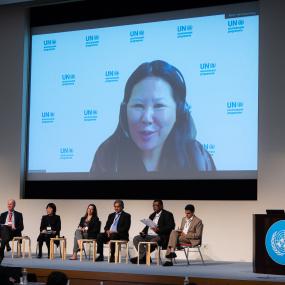
Transparency plays a vital role in ensuring environmental integrity and accountability under the Paris Agreement. Through the Enhanced Transparency Framework (ETF), countries are required to report on climate finance, cooperative approaches, and the use of market mechanisms. UNEP Copenhagen Climate Centre supports countries in building the capacity and systems needed to meet these requirements. This is complemented by tools such as the Article 6 Pipeline, a global, web-based platform that provides open data and analysis on Article 6 activities, helping countries track developments, access insights on carbon market opportunities, and strengthen transparency and understanding of international cooperation.
UNEP Copenhagen Climate Centre provides targeted support on reporting climate finance needed and received, helping countries improve the tracking and transparency of financial flows. This includes building capacity on methodologies and data systems to ensure consistent and reliable reporting.
A key focus is support for reporting under Article 6 of the Paris Agreement. UNEP Copenhagen Climate Centre helps countries understand and apply reporting requirements for cooperative approaches, while also working to strengthen the linkages between Article 6 carbon markets and Article 13 transparency requirements.
Countries are also supported in developing systems for tracking climate finance and market-related transactions, including the institutional arrangements needed to sustain these efforts over time.
Through peer-to-peer exchange on the Climate Transparency Platform, countries can share experiences and practical solutions, helping to build confidence and readiness for participation in carbon markets.
Tools and resources
UNEP Copenhagen Climate Centre has developed several tools and resources designed to assist countries and cities plan, implement, and finance climate action through business models and carbon markets under the Paris Agreement Article 6.
Find related tools and resources below: