
UNEP Copenhagen Climate Centre helps countries and cities respond to climate change. It works across sectors and national to subnational levels to support government entities in assessing climate vulnerability and risks, strengthening climate resilience and adapting to the impacts of climate change. The Centre promotes practical and locally grounded solutions, including nature-based solutions (NbS) approaches, to reduce vulnerability and risks and support sustainable development, while also assisting countries in addressing loss and damage.
The Centre is co-editing and co-producing the annual UNEP Adaptation Gap Report, providing a science-based assessment of the global progress on adaptation planning, financing, and implementation.
Country Support
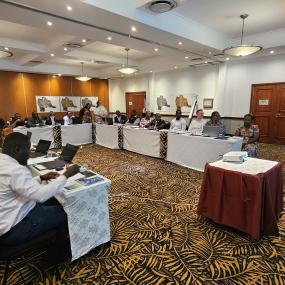
The UNEP Copenhagen Climate Centre supports countries in their adaptation efforts from national to local levels and across all affected sectors, to reduce vulnerability and build long-term resilience. From risk assessments and vulnerability mapping to identifying adaptation needs and priorities to finance strategies and concept development all the way to implementing concrete nature-based solutions and hybrid climate-resilient infrastructure.
The Centre’s work is also connected to addressing Loss and Damage from climate impacts, on vulnerable communities, infrastructure, and ecosystems.
Where we work
- Filter by
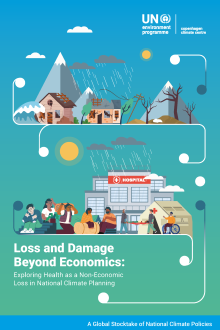
Loss and Damage

Loss and damage refer to the adverse impacts of climate change that persist despite efforts to mitigate emissions and to adapt to the changing climate. It encompasses both economic losses such as damage to infrastructure, property, and productive assets and non-economic losses, including impacts on ecosystems, human health, livelihoods, cultural heritage, and social cohesion. As climate hazards intensify in frequency and severity, addressing loss and damage is becoming an increasingly central component of both national and global climate policy frameworks.
The UNEP Copenhagen Climate Centre supports countries in assessing, managing, and reporting on loss and damage, with a particular emphasis on strengthening institutional and technical capacity. This includes developing and applying robust methodologies, indicators, and data systems to improve the measurement and attribution of climate impacts, as well as linking locally grounded evidence to national and international policy processes.
In addition, the Centre works to integrate loss and damage considerations into national planning instruments such as NDCs and National Adaptation Plans and climate transparency frameworks, including reporting under the Enhanced Transparency Framework of the Paris Agreement. It also advances cross-cutting approaches such as nature-based solutions and contributes to emerging areas of research and policy, including the health-related impacts of climate change.
Nature-based Solutions
UNEP Copenhagen Climate Centre promotes Nature-Based Solutions (NbS) as a critical strategy of integrated climate action, linking mitigation, adaptation, resilience-building, and responses to loss and damage. As part of a wider UNEP support to countries related to NbS, the Centre’s efforts are helping countries and cities design, implement, and monitor NbS projects that restore ecosystems while delivering climate, social, and economic benefits.
When underpinned by robust scientific evidence and systematically embedded within policy and regulatory frameworks, NbS can become a critical instrument for delivering on NDCs, National Adaptation Plans, and sectoral policies — reducing emissions and reducing vulnerability, and minimizing loss and damage.
A central focus of UNEP Copenhagen Climate Centre’s work with NbS is to bridge the gap between national ambition and local delivery.
The Centre delivers science-based support to countries in operationalizing NbS by linking national frameworks to subnational and city-level implementation, ensuring that interventions respond directly to climate risks, ecosystem conditions, and community needs.
The creation of enabling environments for implementation of NbS at city level is a further element of UNEP Copenhagen Climate Centre’s support. Working closely with municipal authorities, the Centre co-develops NbS project pipelines with pilot projects, serving as proof-of-concepts to facilitate upscaling of NbS at national scales. At the same time, the Centre facilitates knowledge sharing and capacity building, offering case studies and training to replicate successful NbS approaches.
UNEP Copenhagen Climate Centre also works to unlock public and private finance by connecting projects to international climate funds and supporting the development of policy-aligned project pipelines, finance strategies and business models.

Transparency

Transparency under the Paris Agreement’s Enhanced Transparency Framework (ETF) helps countries better understand climate risks and impacts, track progress, and communicate adaptation efforts and needs. UNEP Copenhagen Climate Centre supports countries in strengthening their adaptation-related transparency through capacity building, technical guidance, and peer-to-peer knowledge sharing.
UNEP Copenhagen Climate Centre works with countries to identify, prioritize, and report on impacts and risks, and adaptation actions. This includes support for defining and tracking prioritized adaptation measures and ensuring that reporting reflects national circumstances and priorities.
A key area of support is the development of monitoring, evaluation and learning systems for adaptation. The UNEP Copenhagen Climate Centre helps countries establish practical frameworks to assess the effectiveness of adaptation actions and improve future planning. This is complemented by support to build institutional arrangements for data collection, management, and reporting, including in areas such as loss and damage.
Countries also receive guidance, tools, and methodologies to strengthen the quality and consistency of their reporting, including inputs to Biennial Transparency Reports (BTRs). Through peer-to-peer exchange on the Climate Transparency Platform, practitioners can share lessons learned and approaches to common challenges.
Tools and resources
UNEP Copenhagen Climate Centre has developed several tools and resources designed to assist countries to assess climate risks and vulnerabilities and prioritize, finance and implement climate adaptation measures as well as identify and report on Loss and Damage.
Find related tools and resources below: