

UNEP DTU Partnership is distributing reflow funds to social enterprises working with clean and renewable energy throughout Africa, and it is working.
Turning on the lights by flicking a switch is a routine act for most people in the world.
However, for many people in the developing world, electricity is still considered a luxury with more than 1.1 billion people currently living without daily access to modern energy sources.
Building on the success of the African Rural Energy Enterprise Development (AREED) project, UNEP DTU Partnership is now part of distributing reflow funds to social enterprises working with clean and renewable energy throughout the continent.
Electric light enables children to study in the evenings and adds to the feeling of safety around the household, the substitution of conventional light sources, such as petroleum lamps, improves indoor air quality, electricity can power small devices such as radios and fans and perhaps even help the household generate income from activities such as hair dressing or the sale of refrigerated goods.
Building on previous work in Africa
Sustainable Development Goal no. 7 calls for universal access to sustainable energy by 2030, but with current projections estimating roughly 600 million people in Sub-Saharan Africa to remain without access, the challenge of achieving the goal is formidable.
For over a decade, from 2000 until 2012, UNEP DTU Partnership collaborated with five African NGOs to help overcome barriers to clean and sustainable energy supply for rural households in Ghana, Mali, Senegal, Tanzania and Zambia.
The AREED project, aimed to support the establishment of enterprises offering energy services using clean and renewable energy technologies in rural areas of Africa.
The project sought to alleviate the lack of affordable finance for both companies and end-users, which is considered a main barrier for the provision of clean energy services in most developing countries.
To build social enterprises
The work of UNEP DTU Partnerships and its five African NGO partners through AREED was successful in providing financial and technical support to prospective energy entrepreneurs. As a result, roughly 660,000 USD was paid back by enterprises receiving loans through AREED.
To further build on experience gained during AREED, it was decided to distribute the reflow funds equally among the five NGOs for them to develop a business proposal for a social energy enterprise.
The proposals underwent a process of evaluation by UNEP DTU Partnership as well as by an externally contracted consultant, with expertise on entrepreneurship and business development in an African context. In the end, five business plans have emerged that all address the issue of improving access to modern energy services for the rural population in Africa.
"Bringing light to families"
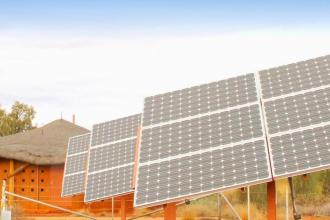
Mali-Folkecenter (MFC) was the project partner of AREED in Mali and has designed a business plan building on lessons learned from AREED to distribute small solar products to rural citizens of Mali.
The idea is to cooperate with a rural electrification company and a micro-finance institution to help facilitate the purchase of products by end-users. The project has already purchased and started the sales of an initial batch of roughly 3,300 solar products and expects to reach 17,000 households within three years.
Profits will be reinvested into the business to facilitate further scaling up the endeavour. The project brings various benefits such as jobs creation through the sale and distribution of products, improving conditions for women as many selling points are anchored in women cooperatives, and reduced CO2 emissions.
Mahamadou Diarra, Energy Access Coordinator of MFC sums up the project thus:
"The AREED fund is bringing light to families, smiles to the faces of school children, and is adding value through a new market development strategy for the clean energy sector in Mali. Now private sector, micro finance and civil society actors have combined their efforts to develop a sustainable, inclusive business to meet the needs of the pico-solar market".
300,000 solar units
Another AREED partner, the Kumasi Institute of Technology (KITE) in Ghana, has likewise developed a business proposal for the distribution of solar products and aims to sell more than 300,000 units mainly in rural areas over the coming three years.
In August, KITE obtained its license from the relevant Ghanaian authorities and is thus ready to kick-off the project.
“Consequently, we have placed orders for the products and made full payment for the fans and 40% down payment for the solar lanterns”, says Executive Director of KITE, Ishmael Edjekumhene.
Funds for new machines
A third AREED partner that has already hit the ground running is Tanzania Traditional Energy Development Organization (TaTEDO) who has devised a business plan to supply locally produced improved cookstoves.
TaTEDO has partnered with a local manufacturer of cookstoves and a micro-finance institution to facilitate the purchase of improved cookstoves on behalf of users. The ambition is to reach more than 40,000 customers with 900 cooktoves having been distributed to sales agents already.
Shukuru Bartholomew Meena, the TaTEDO project coordinator, says about the importance of receiving financial support from AREED: “Production of improved cookstoves requires better working tools than the ordinary ones we had before. With the new machines that we have installed with the support from AREED, our future in the market of improved cookstove is promising and bright due to the competitive and high quality products that will be produced from our workshops”.
Important lessons learned
The two remaining AREED partners, the Centre for Energy, Environment and Engineering Zambia (CEEEZ) and Environment Development Action in the Third World (ENDA) in Senegal, are both in the process of finalizing their business plans before being able to kick off the projects.
CEEEZ in Zambia aims to establish a gasification plant for electricity generation by using agricultural waste to produce clean energy reducing the cost of producing rice for farmers by up to 40%.
ENDA, in Senegal, has devised a business plan to promote an energy efficient oven to rural bakeries. The new oven will reduce energy consumption by 50% compared to conventional ovens. Moreover, the new oven reduces cooking time, improves quality of bread and expands the portfolio of products enabling an increase in sales and revenue.
While it is still early days, the first achievements of the projects that have managed to get off the ground, point to the importance of the lessons learned from the AREED project. Going forward, more achievements are expected in terms of supporting the establishment of social energy enterprises in Africa to improve the provision of clean energy services.