 Cote d'Ivoire
- Technology Needs Assessment
- About TNA
- Countries & Technologies
- TNA Methodology
- TNA Database
Côte d’Ivoire is among the countries most vulnerable to climate change due to its geographical location, its economic structure, and its poor preparation to deal with the harmful effects of climate change.
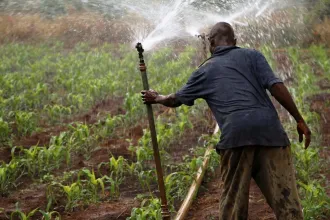
Photo credit: Axel Fassioa, CIFOR / Flickr.
Côte d’Ivoire completed its Technology Needs Assessment in 2013, prioritizing technologies to address climate adaptation and mitigation.
Côte d’Ivoire is among the countries most vulnerable to climate change due to its geographical location, its economic structure, and its poor preparation to deal with the harmful effects of climate change.
Côte d’Ivoire is heavily dependent on its agriculture sector, which engages two-thirds of the population. Recently, revenues from the agriculture sector have dropped significantly due to heavy crop losses related to seasonal disturbances exacerbated by climate change.
The TNA has led to biogas technologies and the production of briquettes from forestry waste being prioritized as measures to curb the emissions released from the residual waste. As a result, two companies, ADERCI and SITRADE, will incorporate biogas production into their waste management plants. In 2025 the country began revising its TNA, making it fit for the challenges that have emerged since 2013.
In its NDC, the country committed to an unconditional target of decreasing economy-wide emissions by 30.41% and a conditional target of 98.95% reduction in emissions by 2030. The revised NDC covers the energy, waste, agriculture, and forestry sectors and contains adaptation targets for the agriculture, forestry and other land use, water, and coastal zone sectors.
The estimated cost of NDC implementation is USD 10 billion for mitigation actions and USD 12 billion for adaptation actions. The country is updating its Partnership Plan, which is considered as a coordination, planning, and tracking tool for the implementation of the revised NDC. Côte d’Ivoire is also in the process of developing an LT-LEDS vision.
Adaptation measures prioritised in Côte d’Ivoire’s TNA include introducing rain guards for rubber plantations, developing water-stress-tolerant crop varieties, and improving rural water supply systems. Mitigation efforts focus on renewable energy like Solar PV, small hydropower, and biogas capture in landfills, alongside waste management solutions such as composting and agricultural briquette production. Taking into consideration the revised NDC, Cote d’Ivoire is prioritizing sectors like agriculture, forestry, water, and coastal zones and that would be captured at the new TNA.
TNA 2017 — Priority technologies for adaptation
Agriculture sector
- Introduction of ‘Rainguard’ in rubber plantations for the protection of latex against rainwater
- Rapid multiplication of plantain banana and cassava varieties tolerant to water stress
- Production of rubber and cocoa clones and of banana and rice seeds tolerant to water stress
Water resources sector
- Abstraction of groundwater using a manual pump
- Using fountains to supply drinking water in peri-urban areas
- Supplying drinking water through improved village water systems in rural areas
TNA 2017 — Priority technologies for mitigation
Energy sector
- Photovoltaic solar kit
- Photovoltaic water-pumping system
- Small hydropower
Waste sector
- Capturing and flaring biogas in landfills
- Production of briquettes from agriculture and forestry waste
- Composting of household waste
Related reports
Get in touch
-
le Ministère de l'Environnement, du Développement Durable et de la Transition Écologique
Responsible Entity -
M. KOUADIO Kumassi Philippe
TNA coordinator