
 Madagascar
- Technology Needs Assessment
- About TNA
- Countries & Technologies
- TNA Methodology
- TNA Database
The TNA prioritized bioplastics as a technology to support Madagascar’s mitigation efforts. The Technology Action Plans details a project in which the relevant stakeholders agreed to establish three bioplastic manufacturing units.
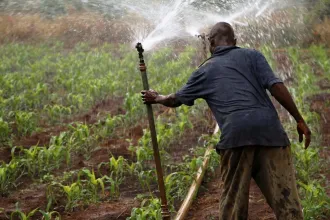
Photo credit: Axel Fassioa, CIFOR / Flickr.
Madagascar completed its TNA in 2018. Worsening climate change impacts from droughts and floods are challenging for the large proportion of the population that base their livelihoods on agriculture.
The agriculture sector is the backbone of the economy, generating 43% of GDP and employing over 80% of the Malagasy population. Accordingly, the TNA has chosen the agriculture population, especially those in rural areas, as the target group for the transfer of technologies.
Based on a recommendation from the TNA, agroforestry has been incorporated into Madagascar’s agriculture development plans and policies. These plans indicate that by 2025 the goal is to install ten agroforestry pilot sites in areas that are especially vulnerable to erosion by rain.
Another national project is to promote private-sector investment in 2,000,000 ha with the goal of introducing the technologies highlighted by the TNA, such as resilient rice technology packages and the production of quality organic fertilizers.
The TNA prioritized bioplastics as a technology to support Madagascar’s mitigation efforts. The Technology Action Plans details a project in which the relevant stakeholders agreed to establish three bioplastic manufacturing units. It is estimated that this action will lead to a reduction of 360 tCO2, as well as reducing sales of conventional plastics by ninety tonnes.
Based on another recommendation in the TNA, the Ministry of Economy and the Ministry of Industry came together to set a goal of securing two hundred ha of protected forest annually. This will generate five hundred jobs, but it will also serve to scale down total sawmill residues, which is estimated to result in a potential reduction of 19,000 tCO2 per year.
Priority technologies for adaptation
Agriculture sector
- Resilient Rice Technology Packages or MIRRs
- Association of fruit crops and food crops along contour lines or with agroforestry
- Production of quality organic fertilizers
Water resources sector
- Integrated Water Resources Management
- Drinking water supply by gravity
- Drinking water supply by drilling equipped with hand pump or motorized pump
Priority technologies for mitigation
Energy
- Large hydropower plant
- Small hydropower plant
- LED lamps
Industry
- Reduction of clinker-cement ratio by addition of fly ash
- Bioplastics
- Industrial waste valorization (sawdust)


Related reports
Get in touch
-
Ministère de l'Environnement, de l'Ecologie et des Forêts (MEEF)
Responsible Entity -
Michel Omer Laivao
TNA coordinator