
 Mali
Mali
- Technology Needs Assessment
- About TNA
- Countries & Technologies
- TNA Methodology
- TNA Database
The country aims to reduce its emissions by 31% for energy, 25% for agriculture, 39% for land use and forestry, and 31% for waste sectors by 2030.
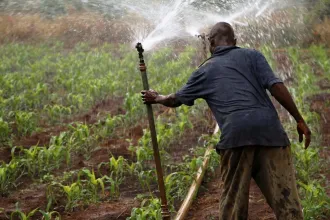
Photo credit: Axel Fassioa, CIFOR / Flickr.
Mali completed its TNA in 2012. Its TNA outlines key projects to introduce prioritized technologies for climate adaptation and mitigation.
Prioritized technologies for adaptation included fodder cropping, land development, and water retention systems, while mitigation technologies focus on hydropower, solar photovoltaic, and sustainable agricultural practices.
Mali is one of the most vulnerable countries to climate stress due to its socio-economic status, geographic location, and climate-sensitive economy. Approximately 65% of Mali’s land area is either desert or semi-desert. Mali’s economy is dominated by the extraction of raw materials and natural resources like Gold and Kaolin, which contributes 35% to GDP. Agriculture, water, and health are all key sectors that are particularly vulnerable to the adverse impacts of climate change.
The country submitted its updated NDC in October 2021. The country aims to reduce its emissions by 31% for energy, 25% for agriculture, 39% for land use and forestry, and 31% for waste sectors by 2030 as compared to the business-as-usual scenario. The updated NDC covers the energy, agriculture, forestry and other land use, and waste sectors. Mali is revising the NDC Action Plan and Investment Plan which will be aligned with the revised NDC.
Mali’s Technology Action Plans identify several projects and programmes aimed at introducing the prioritized technologies. Examples include the establishment of micro-hydroelectric stations along the Senegal and Niger rivers and of photovoltaic solar power plants, both technologies that will provide clean energy to the rural population, as well as the more urbanized southern areas of Mali. In 2025, Mali began to update its first TNA, identifying possible climate technologies that can support the country in implementing its NDC.
Between 2015 and 2019, the adoption of innovative technologies spurred the development of several small-scale projects aimed at addressing climate change and improving water resource management. Some of the technologies identified during the TNA process were reaffirmed in Mali’s revised NDC
TNA 2012 — Priority technologies for adaptation
Agriculture sector
- Practice of fodder cropping within three varieties of crops to cover the ecological zones
- Development of cultivated lands according to local contours
Water resources sector
- Drilling technology
- Small water retention dams
TNA 2012 — Priority technologies for mitigation
Energy sector
- Hydropower
- Solar photovoltaic
Agriculture sector
- System for intensive rice cultivation
- ?Microdosing’


Related reports
Get in touch
-
L'agence de l’Environnement et du Développement Durable (AEDD)
Responsible Entity -
Cisse Aboubacary Sidiki
TNA coordinator