 Peru
Peru
- Technology Needs Assessment
- About TNA
- Countries & Technologies
- TNA Methodology
- TNA Database
In 2020, Peru submitted its updated NDC committing to reducing emissions between 30% to 40% by 2030 as compared to the business-as-usual scenario. The updated NDC has a strong focus on adaptation and covers actions related to water, fishing and aquaculture, forestry, agriculture, health, tourism, and transport.
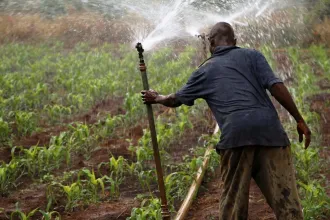
Shutterstock.
Peru conducted its first TNA already in 2012, focusing on water and waste sectors. In 2025, the country joined TNA Phase V, striving to reassess past findings, seeking to develop implementable action plans that will help the nation in low-carbon development.
Peru is increasingly vulnerable to climate change impacts, including extreme weather events such as floods and droughts, which threaten its ecosystems and livelihoods. These events are further extrapolated by the El Nino phenomena, which have severe impacts on the Latin American countries weather patterns. TNA process mirrored each of Peru’s diverse ecological regions’ particularities, as they each face specific challenges.
The TNA process chose technologies based on their regional relevance, as each of Peru’s diverse regions calls for different technological needs. In 2025, Peru rejoined TNA Phase V, striving to reassess past findings, seeking to develop implementable action plans that will help the nation in low-carbon development.
In 2020, Peru submitted its updated NDC committing to reducing emissions between 30% to 40% by 2030 as compared to the business-as-usual scenario. The updated NDC has a strong focus on adaptation and covers actions related to water, fishing and aquaculture, forestry, agriculture, health, tourism, and transport.
Peru’s NDC also includes a commitment to achieve carbon neutrality by 2050, highlighting the country’s long-term vision for sustainable development. The government acknowledges the need for enhanced efforts and international cooperation to meet these ambitious climate goals effectively.
Overall, Peru’s NDC reflects both its vulnerability to climate change and its determination to implement strategies that foster resilience while promoting sustainable economic growth.
TNA 2012 — Priority technologies for adaptation
Water resources sector- Piura region
- Fog harvesting
Water resources sector- Junín region
- System of terraces
Water resources sector - Lima region
- Rural reservoirs and irrigation system
TNA 2012 — Priority technologies for mitigation
Solid waste management sector - Piura region
- Recycling
Solid waste management sector- Junín region
- Composting
Solid waste management sector- Lima region
- Manual landfill


Get in touch
-
National Office for Climate Change and Secretariat of Environment and Sustainable Development (MINAM)
Responsible Entity -
Berioska Quispe Estrada
TNA coordinator