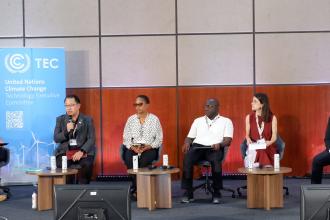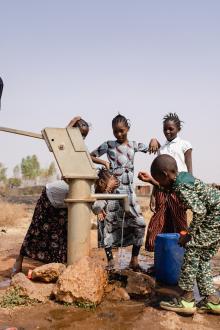

The UNEP Copenhagen Climate Centre works to accelerate and scale the implementation of climate technologies that enable low-carbon and climate-resilient development globally.
Country Support
Through its climate technology work, the UNEP Copenhagen Climate Centre supports countries in delivering on the objectives of the Paris Agreement by accelerating and scaling climate technologies for mitigation and adaptation, while strengthening national innovation systems.
The Centre provides technical assistance, guidance, and practical tools to help developing countries identify, assess, and implement priority climate technologies across key sectors such as energy, transport, water, and agriculture. This support directly contributes to the formulation, implementation, and enhancement of NDCs and long-term, low-emission and climate-resilient development strategies.
In line with the Paris Agreement’s emphasis on strengthening national capabilities, the Centre supports capacity building and knowledge sharing to scale up effective climate technology deployment and foster enabling innovation ecosystems. Through online toolkits, training programmes, and methodological guidance, it helps national institutions and practitioners integrate climate technologies into planning processes, monitor progress, and build durable local expertise.
In addition, the Centre assists countries in mobilizing climate finance, designing enabling policy and regulatory frameworks, and fostering public–private partnerships. By linking innovation, finance, and policy, the Centre accelerates climate technology implementation in support of increased ambition, resilience, and sustainable development.
Where we work
- Filter by
Technology Needs Assessments
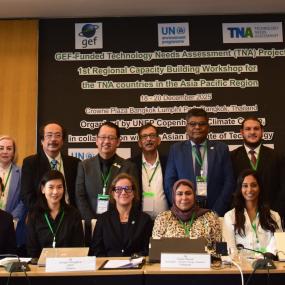
The Technology Needs Assessments (TNAs) is a long-standing UNFCCC process that helps countries identify and prioritize climate technologies for mitigation and adaptation through a participatory, country-driven approach. By analysing barriers and enablers, and developing Technology Action Plans, TNAs support the uptake of climate technologies and increasingly inform Nationally Determined Contributions and long-term strategies. The Global TNA Project is implemented by the United Nations Environment Programme and the UNEP Copenhagen Climate Centre on behalf of the Global Environment Facility, helping countries translate climate ambition into action.
About TNA
The Global Technology Needs Assessment (TNA) Project supports countries in turning climate ambition into concrete, actionable, technology-inclusive strategies. Building on more than a decade of experience, the initiative helps governments identify, evaluate, and prioritize technologies that can drive both mitigation and adaptation, while strengthening national capacities to plan, implement, and scale these solutions.
At its core, the TNA approach recognizes that technology is fundamental to achieving the goals of the Paris Agreement and to meeting the rising expectations for greater ambition in each new generation of Nationally Determined Contributions (NDCs). Far beyond technical inventories, TNAs serve as inclusive, country-driven processes that foster dialogue across government agencies, private sector actors, researchers, and communities. This collaborative foundation helps ensure that technology choices are not only technically sound but also aligned with broader development goals, national policies, and long-term climate strategies.
Turning Climate Ambition into Action
TNAs are proving to be essential instruments for translating climate ambition into practical action. Based on the most recent set of NDC submissions, an overwhelming majority of Parties have provided information on technology development and transfer, highlighting their priorities and needs with varying levels of detail. A significant share explicitly referenced TNAs as a source of information for shaping or implementing their NDCs. Additionally, most countries elaborated on technology-related measures focused on adaptation, underscoring the growing relevance of technology planning in national climate strategies.
As countries prepare the next generation of NDCs, the role of TNAs continues to evolve. Many are enhancing their TNA processes to better integrate with existing national planning cycles, ensuring that identified technology needs reflect both current realities and emerging opportunities. This includes assessing the feasibility and scalability of selected technologies, ensuring alignment with sustainable development objectives, and strengthening enabling environments for technology transfer across key sectors.
A Strategic, Integrated Approach
When strategically aligned, TNAs can maximize their impact by assessing what is needed to implement current NDCs, ensuring that technology priorities reflect national development pathways, and creating synergies with climate finance strategies. Through this approach, TNAs become embedded tools for implementation, not one-off assessments but living processes that guide continuous improvement.
Many countries have already demonstrated how effectively TNAs can inform national climate planning. Some have used their TNA outcomes to support mitigation targets in major emitting sectors, while others have incorporated TNA-identified adaptation technologies into their NDCs or National Adaptation Plans.
A Foundation for the Future
The continued integration of TNAs into national climate strategies reflects a maturing, more strategic approach to climate planning — one that is inclusive, evidence-based, and focused on implementation. As countries look toward more ambitious climate commitments, the Global TNA Project remains committed to supporting them in translating vision into action through technologies that are sustainable, context-appropriate, and transformative.

Methodology

Since its launch in 2001, the Technology Needs Assessment (TNA) methodology has matured into a well-established, country-driven process applied across diverse national contexts. Over the years, it has evolved to reflect practical experience, lessons learned, and the increasing emphasis on technology as a cornerstone of global climate action. Today, the methodology not only guides countries in identifying priority technologies for mitigation and adaptation but also supports their efforts to develop and implement Nationally Determined Contributions (NDCs) under the Paris Agreement. All official TNA guidebooks that support this process—from technology prioritization to barrier analysis, Technology Action Plans, and project concept note development—are available under the Publications section of this website.
The TNA framework is designed to be flexible, participatory, and aligned with national development priorities. It brings together government institutions, technical experts, private sector actors, academia, and civil society to jointly identify technology needs and chart pathways for implementation. The methodology is structured around four interconnected activities:
1. Identifying and Prioritizing Technologies
The process begins with the identification and prioritization of mitigation and adaptation technologies in selected sectors. Countries assess current challenges, future climate risks, and development objectives to determine which technologies can deliver the highest impact. This step combines evidence-based analysis with stakeholder engagement to ensure that selected technologies are technically feasible, socially acceptable, and aligned with national planning processes.
2. Analysing Barriers and Enabling Frameworks
Once priority technologies are selected, countries analyse the barriers that may hinder their deployment, diffusion, or scaling. These barriers may be financial, institutional, technical, regulatory, or, for example, related to information and awareness. In parallel, the TNA process examines the enabling environment, including policies, governance structures, market conditions, and capacity needs, to identify opportunities for strengthening the innovation systems. This analysis provides a clear understanding of what is required to successfully introduce and sustain the prioritized technologies.
3. Developing Technology Action Plans
The final step involves translating the findings from the previous stages into Technology Action Plans (TAPs). TAPs are medium- to long-term implementation plans that outline concrete actions, responsible actors, timelines, and estimated resource needs for deploying the selected technologies. These actions are further developed into project concept notes, enabling countries to attract finance, build partnerships, and integrate technology pathways into broader climate and development strategies.
4. Developing Targeted Project Concept Notes
Building on the TAPs, countries develop project concept notes aimed at mobilizing finance from diverse funding sources. These concept notes translate priority actions into concise, investment-oriented concepts that align with the requirements of international climate funds, development banks, bilateral partners, and private investors. The process helps countries articulate the climate rationale, expected impacts, cost estimates, co-benefits, and implementation arrangements in formats commonly used by financing institutions. As a result, project concept notes become powerful tools for catalyzing funding, establishing partnerships, and advancing technologies from planning to implementation.
Transparency
Transparency is a cornerstone of the Paris Agreement’s Enhanced Transparency Framework (ETF), enabling countries to understand progress, build trust, and inform stronger climate action. The UNEP Copenhagen Climate Centre supports developing countries in building the systems and capacity needed to meet these requirements, including through direct technical assistance and peer-to-peer exchange via the Climate Transparency Platform.
In the area of technology, UNEP Copenhagen Climate Centre helps countries strengthen their ability to report on technology needs and support received. This includes guidance on identifying and articulating technology needs through Technology Needs Assessments, as well as tracking progress in technology development and transfer.
Support focuses on improving institutional arrangements and data systems so that countries can systematically collect, manage, and report information. The UNEP Copenhagen Climate Centre also provides methodologies and tools to help ensure that reporting is consistent, transparent, and aligned with ETF requirements. Through capacity-building activities and hands-on support, countries are better equipped to link technology needs with implementation and support received.
Tools and resources
UNEP Copenhagen Climate Centre has developed several tools and resources designed to assist countries assess, prioritize and implement climate technologies.
Find related tools and resources below: