As Loss and Damage (L&D) becomes increasingly critical in climate negotiations, the need for accurate and comprehensive L&D indicators has never been more pressing. These indicators are essential for countries to effectively engage with the Santiago Network, access technical assistance, and participate meaningfully in UNFCCC processes.
Moreover, L&D indicators align with the New Collective Quantified Goal on Climate Finance (NCQG) framework, enabling countries to assess vulnerabilities, track adaptation progress, and ensure transparency in their climate strategies. Accurate and comprehensive indicators are crucial for integrating loss and damage into broader climate change efforts and fostering global collaboration on climate impacts.
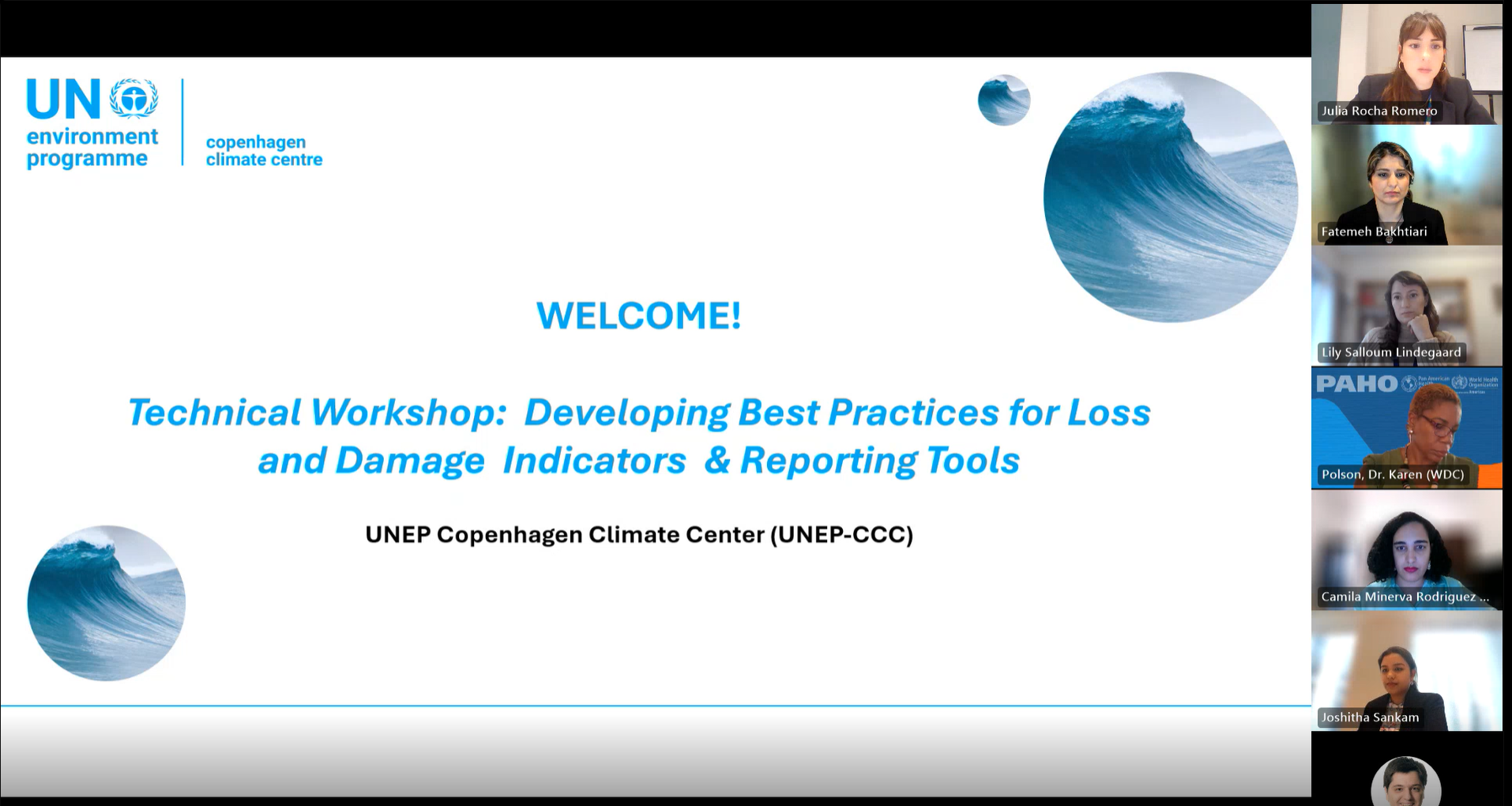
This technical workshop, organized by the UNEP Copenhagen Climate Centre (UNEP-CCC) aimed to advance these goals by enhancing transparency and effectiveness in climate change responses. By developing these indicators, countries will strengthen their capacity to address the challenges posed by climate change and foster global collaboration on climate impacts.
Objectives:
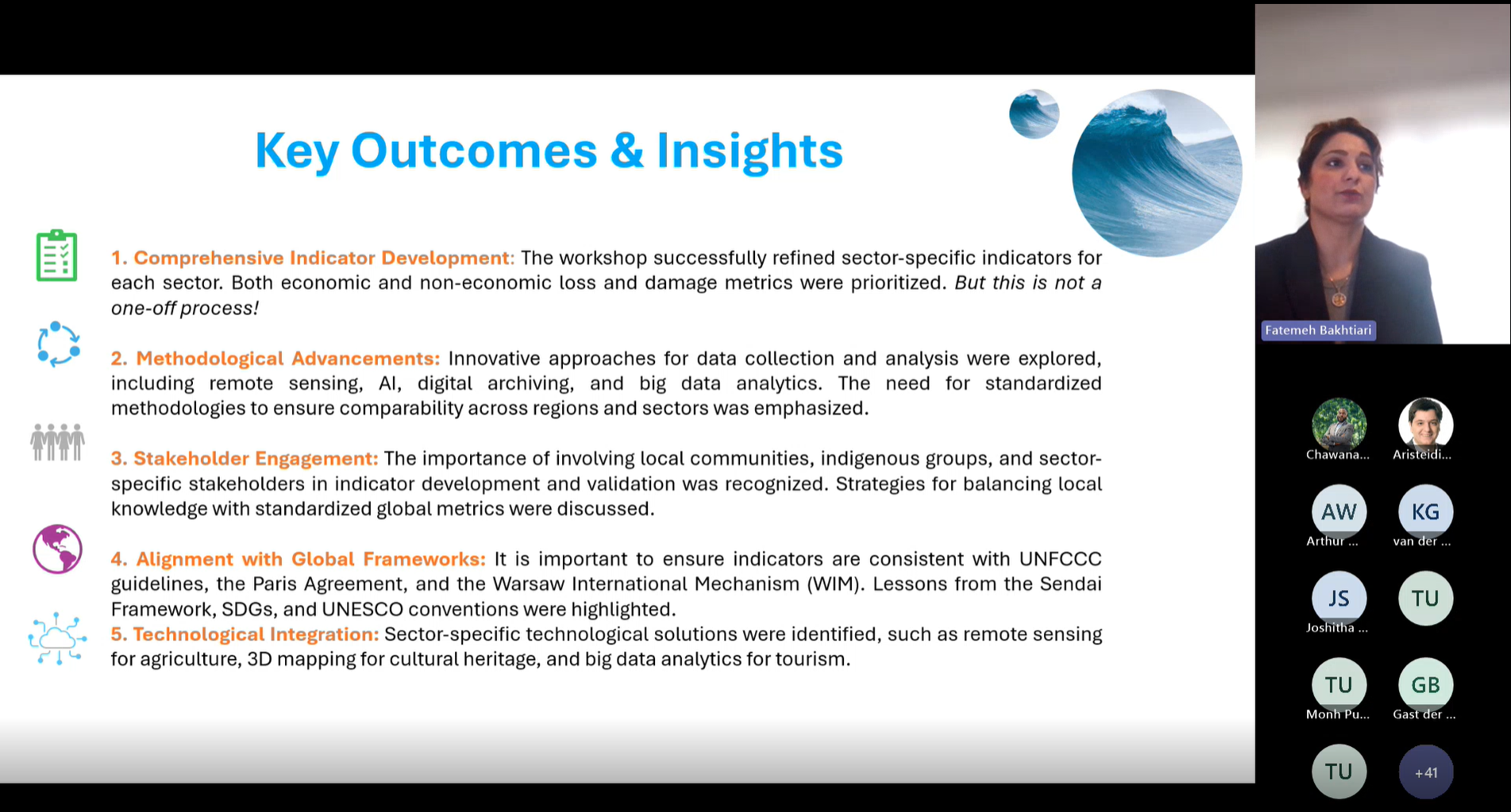
To develop comprehensive L&D indicators: Identify and refine indicators that can accurately assess and report the impacts of climate change across various sectors, in line with UNFCCC guidelines.
To enhance countries' capacity for L&D measurement and reporting: Provide tools and methodologies that can help member states effectively measure, document, and report their losses and damages, thus supporting their engagement with the Santiago Network.
To coordinate L&D transparency with international processes: Align UNEP’s efforts with global frameworks, including the Paris Agreement and the Warsaw International Mechanism (WIM), to enhance the consistency and comparability of L&D reporting.
Workshop Details:
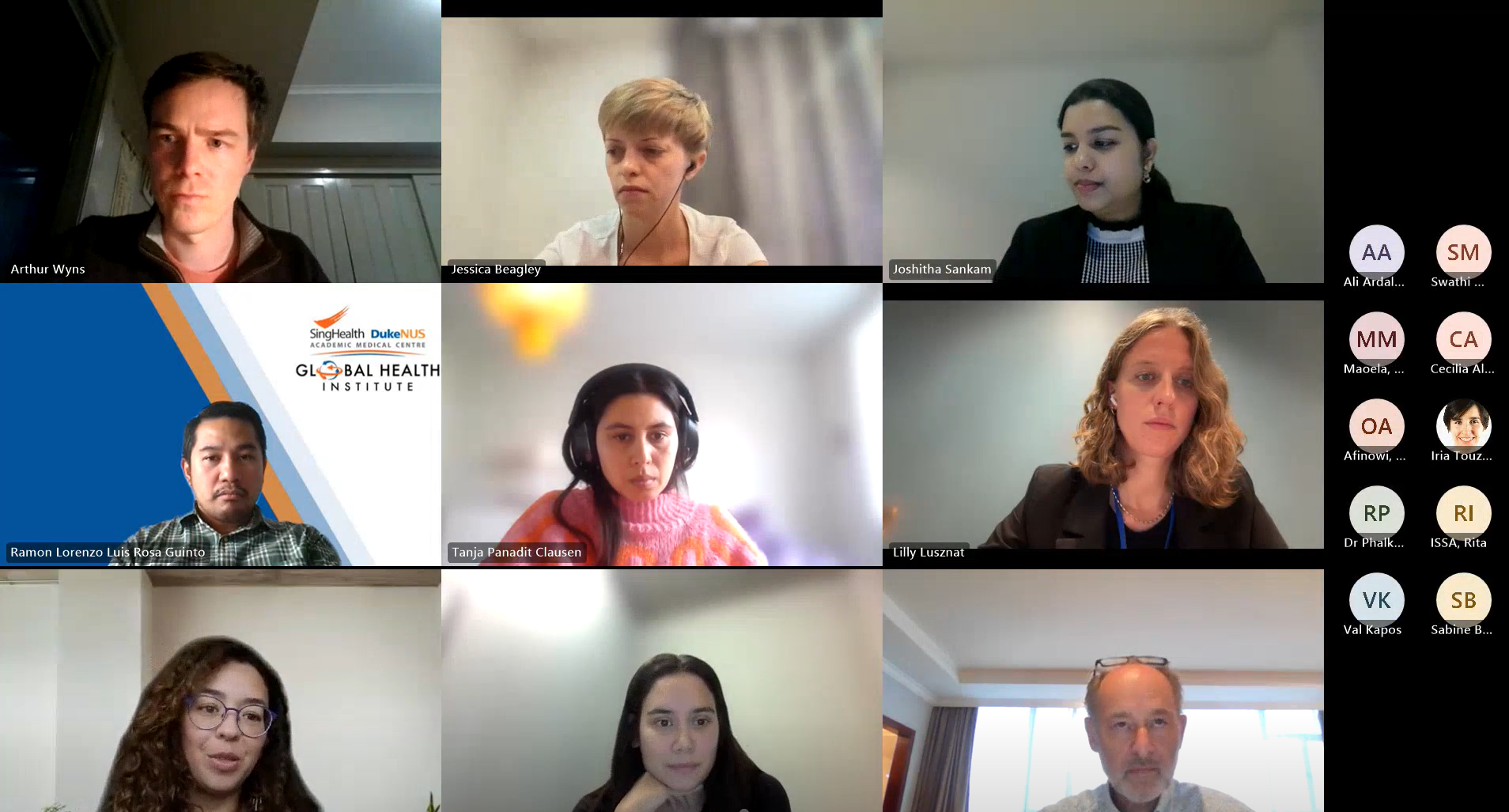
The two-day virtual workshop was an interactive and participatory forum for national technical experts working with Loss and Damage. Participants engaged in expert presentations and sector-specific breakout group discussions to share insights and develop best practice indicators and reporting tools.
Sectoral Focus
The technical workshop featured in-depth discussions across key sectors identified as particularly vulnerable to climate change impacts, ensuring a comprehensive approach to developing effective Loss and Damage (L&D) indicators.
Day 1 recording:
Download the presentations here.
Day 2 recording:
Download the presentations here.
Moderators
Day 1
Day 2
Each session was guided by expert moderators who facilitated discussions and provided insights into developing robust L&D indicators tailored to these sectors.
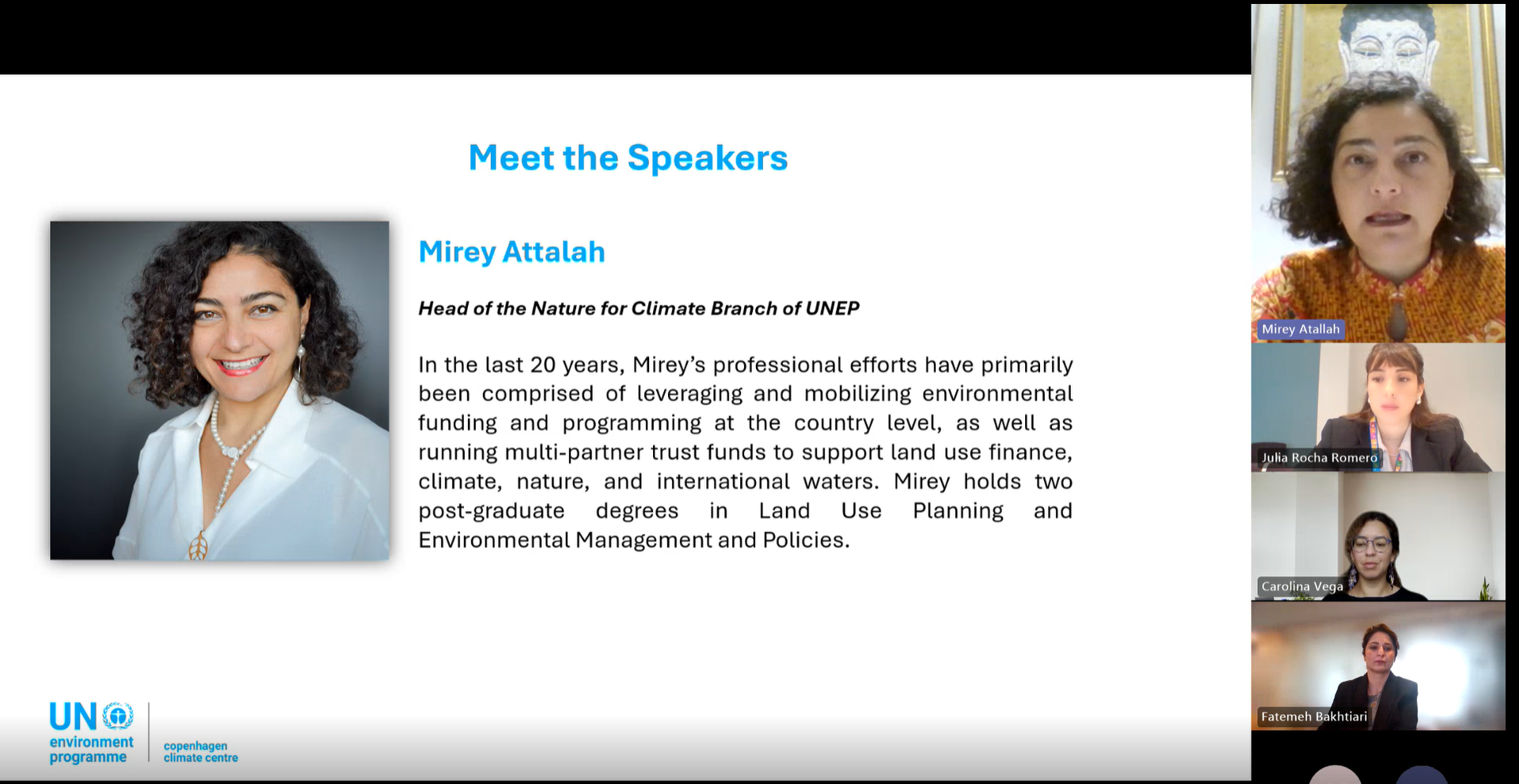
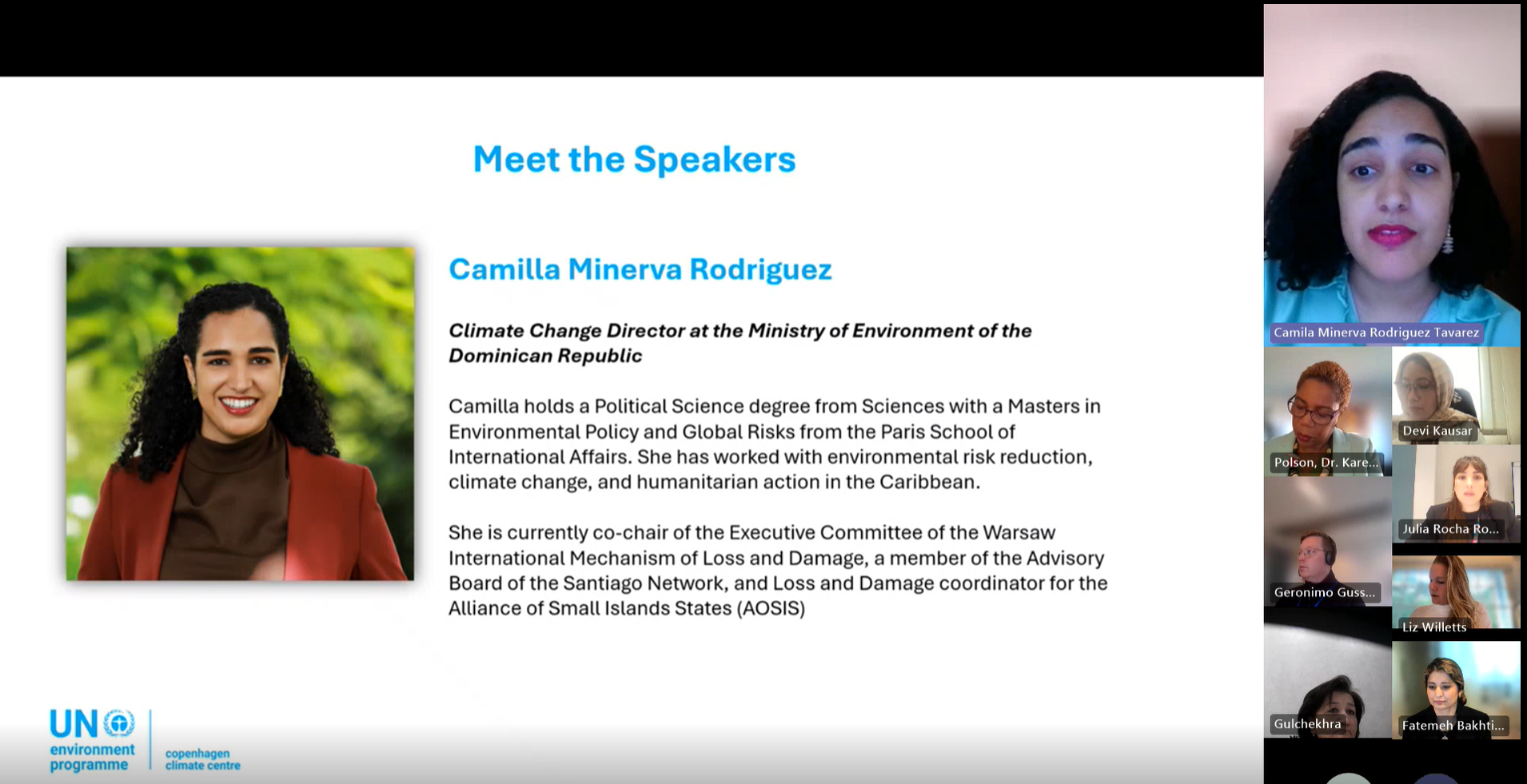
Meet the speakers
-
Fatemeh Bakhtiari
Senior Advisor - Climate Policy, Loss and DamageFatemeh Bakhtiari
- Email: fatemeh.bakhtiari@un.org
- LinkedIn: View Profile
Bio
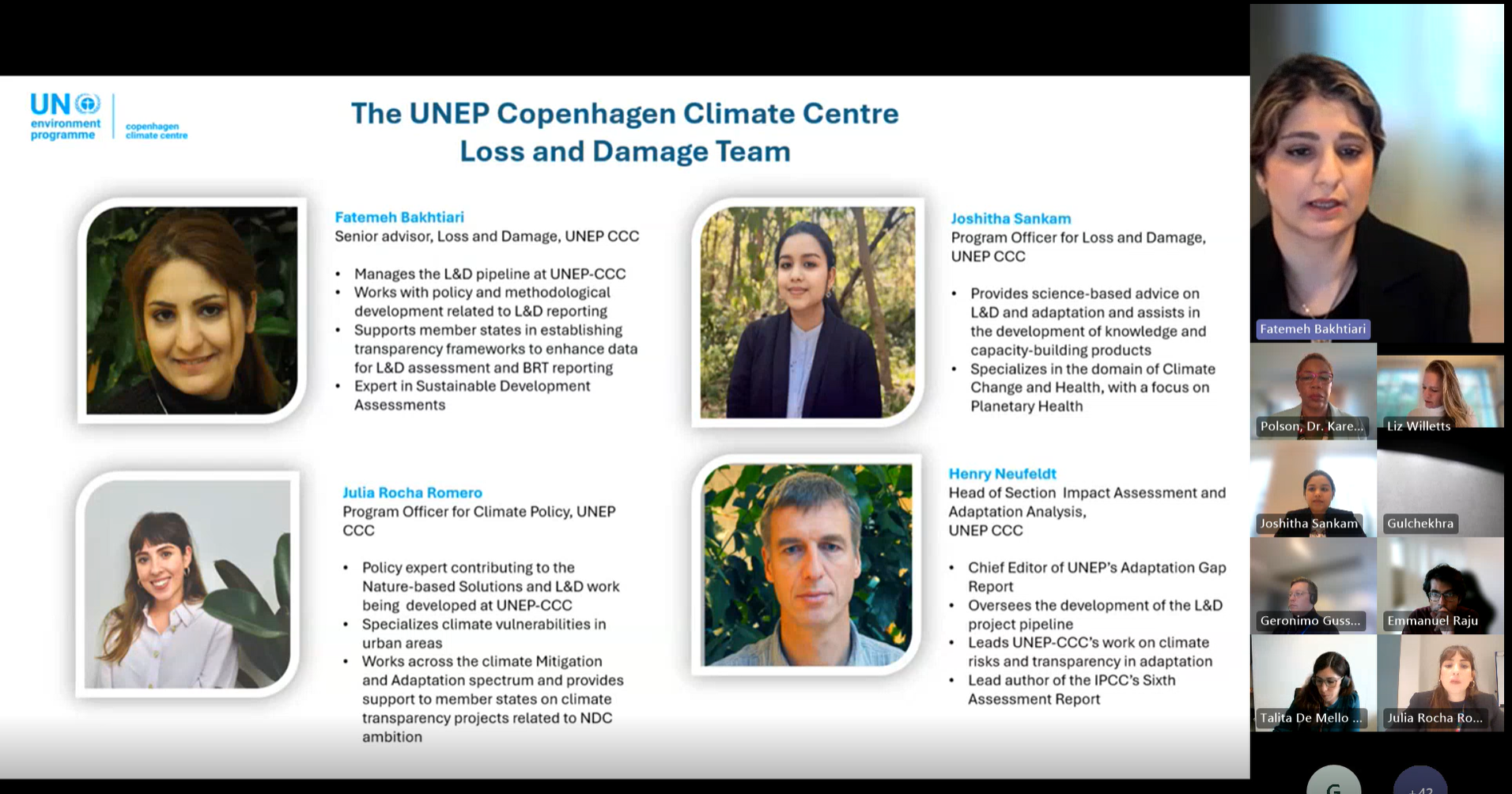
Fatemeh Bakhtiari serves as a Senior Advisor at the UNEP Copenhagen Climate Centre, specializing in Loss and Damage at the City-level/national level. She leads policy and methodological development related to responding to Loss and Damage (L&D) and assists countries in establishing transparency frameworks to enhance data for L&D assessment and BRT reporting, such as through the ICAT project and UNEP-funded project CBIT/GSP. With a background in impact assessment, policy analysis, climate change mitigation, and sustainable natural resource management, her expertise includes developing tools for analyzing and prioritizing mitigation and adaptation actions, utilizing choice modelling, and quantifying and monetizing sustainable development co-benefits of climate actions within monitoring, reporting, and verification (MRV) frameworks.
Fatemeh holds a Ph.D. in Environmental Economics and Management from a joint doctoral program between the Universities of Copenhagen (Denmark) and Bangor (United Kingdom).
-
Joshitha Sankam
Project Officer - Loss & Damage and HealthJoshitha Sankam
- Email: joshitha.sankam@un.org
- LinkedIn: View Profile
Bio
Dr. Joshitha Sankam serves as a Project Officer at UNEP Copenhagen Climate Centre. Her work involves providing science-based advice on loss and damage and adaptation and assist in the development of knowledge and capacity building products for various aspects related to climate impacts, loss and damage, adaptation, vulnerability, resilience, and transparency.
She specializes in the domain of Climate Change and Health, with a focus on Planetary Health. Prior to joining UNEP-CCC, she served as a Consultant in Climate Change and Health at the Divecha Centre for Climate Change, IISc, where she designed and implemented training programs and workshops for health professionals in the context of climate change and health. Additionally, she held the position of Lead-Health Sensitization and Science Officer at Future Earth South Asia, spearheading initiatives focused on health sensitization, adaptation, and community resilience. Prior to this, her work at Azim Premji University focused on research of the tools and methods for assessing health vulnerability and adaptation to climate change. She is also a Global Outreach Fellow at the Planetary Health Alliance.
Joshitha holds a Master’s degree in Public Health from Manipal University with a specialization in Global Health, as an exchange student from Maastricht University.
-
Julia Rocha Romero
Advisor - Nature-based SolutionsJulia Rocha Romero
- Email: julia.rocharomero@un.org
- LinkedIn: View Profile
Bio
Julia works at the UNEP Copenhagen Climate Centre in the Impact Assessment and Adaptation Analysis section, where she contributes to projects related to nature-based solutions, loss and damage, and climate transparency. Additionally, Julia is engaged in providing support to member states in establishing transparency frameworks and institutional arrangements for improved assessment of climate mitigation transparency efforts. For three consecutive years, Julia sat at the Secretariat of UNEP’s Emissions Gap Report, where she supported the production of the report and co-authored a chapter on Food Systems (EGR 2022).
Alongside the Head of the IAAA Section, Julia leads UNEP-CCC’s engagement in the Danish NbS Knowledge Platform and contributes to the Centre’s nature-based solutions pipeline and knowledge products. Julia is also a part of UNEP-CCC’s Loss and Damage team, where she contributes to UNEP’s growing role in L&D and supports member states in establishing transparency frameworks to enhance data for L&D assessment.
Her prior research concentrated on local climate governance driven by urban leadership, specifically examining local climate ambition and the implementation of climate adaptation strategies through the lens of transnational municipal networks. Additionally, Julia has researched tropical forest conservation within protected areas of the Brazilian Amazon, further enhancing her expertise in environmental issues, local stewardship, and nature-based solutions. Julia holds a Bachelor’s degree in International Relations from the Metropolitan University of Prague, specializing in Environmental Security. She furthered her education with a Master’s degree in Human Security from Aarhus University and a second Master’s degree in Climate Change from the University of Copenhagen, where she completed a minor in Global Environmental Governance.