
 Pakistan
- Technology Needs Assessment
- About TNA
- Countries & Technologies
- TNA Methodology
- TNA Database
To update and strengthen the current technical capacity of Pakistan’s extreme weather technology, the TNA has outlined a project that aims to install two hundred automatic weather stations and five wind profilers, and automate fifty existing observatories.
Photo credit: D'July / Shutterstock.
Pakistan completed its TNA in 2017. To tackle recurring damage from extreme weather events, Pakistan’s TNA prioritizes climate monitoring, forecasting and early warning system technologies.
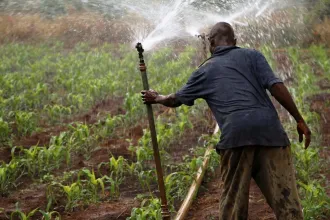
In light of Pakistan’s arid and semi-arid geography, high-efficiency irrigation systems are highlighted as technologies that will help tackle the constant challenge of water shortages. In line with existing national policies, the TNA sets out the aim of installing drip and sprinkler irrigation systems on five million hectares during the next five years. A key barrier to achieving this is the presence of short-term, inconsistent and conflicting policies, as Pakistan does not have formal agriculture and water policies.
To update and strengthen the current technical capacity of Pakistan’s extreme weather technology, the TNA has outlined a project that aims to install two hundred automatic weather stations and five wind profilers, and automate fifty existing observatories.
The TNA has formulated actions aimed at developing long-term, national policy frameworks that would create a conducive environment for the diffusion of technology.
To ensure this, a project has been outlined that is expected to install high-efficiency irrigation on 10,000 small farms in dryland areas, as well as building capacity by training 5,000 farmers and 180 government departmental staff in the different aspects and uses of the technology.
Priority technologies for adaptation
Agriculture
- High-efficiency irrigation systems for irrigated and rain-fed areas
- Drought-tolerant crop varieties
- Climate monitoring and forecasting – early warning system
Water
- Surface rainwater harvesting
- Groundwater recharge
- Urban storm-water management
Priority technologies for mitigation
Energy
- Efficiency improvements to boiler and furnace energy
- Improving energy efficiency in buildings
- Solar energy technology
Agriculture and LULUCF
- Reforestation and reducing CO2 emissions from forest degradation
- Farm forestry as a carbon sink
Transport
- Bus rapid transport
- Vehicle tuning


Related reports
Get in touch
-
Ministry of Climate Change
Responsible Entity -
Irfan Tariq
TNA coordinator