
 Indonesia
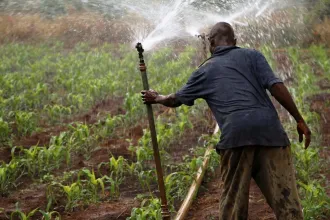
The TNA highlighted drought- and flood-tolerant rice varieties as one of the priority technologies for Indonesia. The adoption of tolerant rice varieties has the potential to strengthen the resilience of the agriculture sector, improve food security and reduce poverty levels.
Photo credit: D'July / Shutterstock.
Indonesia completed its TNA in 2012. The implementation of the technologies prioritized by the TNA can have significant advantages for Indonesia. However, several barriers were identified as hindering their successful acquisition, deployment and diffusion.
The most significant barriers include the lack of initial capital, of human skills and of sufficient institutional capacity.
As part of the TNA, Indonesia completed Technology Action Plans for each of the priority technologies in order to identify the activities and enabling frameworks that would overcome these barriers.
The TNA highlighted drought- and flood-tolerant rice varieties as one of the priority technologies for Indonesia. The adoption of tolerant rice varieties has the potential to strengthen the resilience of the agriculture sector, improve food security and reduce poverty levels.
The Republic of Indonesia is comprised of more than 17,500 islands and is the world’s fourth most populous country. Its strong dependence on agriculture and its large coastal population render Indonesia highly vulnerable to the impacts of typhoons, floods, landslides and rises in sea level.
Indonesia plans activities such as strengthening policies, coordination between agencies and the creation of public-private partnerships, as well as new subsidy structures. These activities are important steps in securing the successful transfer of technologies.
Priority technologies for adaptation
Food security sector
- Tolerant crops
- Mariculture
Water resource sector
- Rainwater harvesting
- Wastewater recycling
Coastal zone sector
- Seawall and revetment
- Groyne technology
Priority technologies for mitigation
Energy sector
- Photovoltaics
- Improvement of public transport
Forestry sector
- Measurement and monitoring of carbon sequestration and emission
- Peat re-mapping
Waste sector
- Mechanical biological treatment
- In-vessel composting


Related reports
Get in touch
-
Agency for the Assessment and Application of Technology (BPPT)
Responsible Entity -
Widiatmini Sih Winanti
TNA coordinator