Showing 25 - 32 of 3520 results
- News 6 May 2026 Advancing action on climate-related loss and damage through stronger data, policy and capacity Climate change is causing losses that extend far beyond economic costs. Impacts on health, cultural heritage, biodiversity, livelihoods, ecosystems, social cohesion and community identity are becoming increasingly evident, yet these non-economic losses and damages remain difficult to assess and are often insufficiently reflected in national policies and planning. To address these challenges, the Symposium on Loss and Damage – Advancing Non-Economic Losses: Data, Policy, and Capacity for Action…
- News 4 May 2026 Mongolia launches second technology needs assessment to advance climate action A new Technology Needs Assessment (TNA) project in Mongolia is set to accelerate the identification and deployment of priority climate technologies, supporting both mitigation and adaptation efforts. By providing a structured, country-driven process to identify technology needs and related investments, the TNA and its Technology Action Plans (TAPs) helps strengthen national planning, mobilize finance, and align climate action with sustainable development goals.The Ministry of Environment and…
- Project 1 May 2026 Mali – Study of an environmental taxation system In response to the Government of Mali's national priority to enhance environmental governance and promote sustainable development, the below output and activities were submitted by the Government of Mali to NDC Partnership to develop a framework and identify options for the effective implementation of environmental taxation in the country. Output: Framework and options for the implementation of environmental taxation in Mali Activity 1.1: Review existing environmental taxation policies…
- Project 1 May 2026 Upscaling Zimbabwe’s NDC Implementation and Raising Ambition for NDC 3.0 Supporting Zimbabwe to operationalize its climate commitments and develop an ambitious NDC 3.0 for 2025–2035This project supports Zimbabwe in preparing its next-generation NDC 3.0 for 2025–2035, enhancing the country’s climate ambition by expanding mitigation actions beyond the energy sector to include AFOLU, waste, and IPPU, aiming at increasing GHG emission reductions per capita from 33% to 40% by 2030, while also strengthening the country’s adaptation framework to address growing climate…
- Project 1 May 2026 Strengthening Climate Finance Capacities in Tunisia Strengthening climate finance capacities of Tunisian sectoral ministries and supporting the establishment of a sectoral project portfolio by improving existing project proposalsTunisia advanced the development of its next Nationally Determined Contribution (NDC 3.0), with a strong focus on translating enhanced climate ambition into concrete, investment-ready actions. UNEP Copenhagen Climate Centre supported Tunisian sectoral ministries in strengthening climate finance capacities and developing…
- Project 1 May 2026 Climate-proofing the resilience of the Moroccan agriculture sector Morocco is among the most vulnerable countries to climate change impacts. Its agricultural sector, its economy and its population are exposed to increasingly severe hazards. At the same time, the agriculture sector is a sizeable source of GHG emissions. Responding to the need for climate change mitigation and adaptation will require mainstreaming climate change considerations into the work of the country’s preeminent provider of support to farmers, the Moroccan Agriculture Development Agency…
- Publication 1 May 2026 Strengthening National Responses to Loss and Damage - A Practitioners Brief This practitioners brief is for government officials, practitioners, and partners who need to turn the Loss and Damage agenda into concrete national action. It builds on the Strengthening National Responses to Loss and Damage guide, available here. Effective Loss and Damage strategies recognize that some impacts can still be avoided or reduced through better risk management, while others require measures to manage and respond to residual and irreversible losses. Justice is central: who…
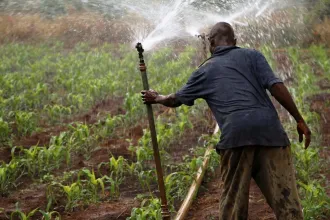
- Publication 30 April 2026 Summary Brief: Pumping up Climate Technology in Uganda This brief provides a summary of business and financing models for scaling solar-powered irrigation systems (SPIS) in Uganda. It highlights SPIS as a strategic climate technology for Uganda's agriculture sector, which employs about 70% of the population but faces significant climate risks. The brief demonstrates that SPIS can increase crop yields, enable off-season production, and stabilize farmer incomes. It reviews market progress, identifies structural barriers (such as high upfront costs…